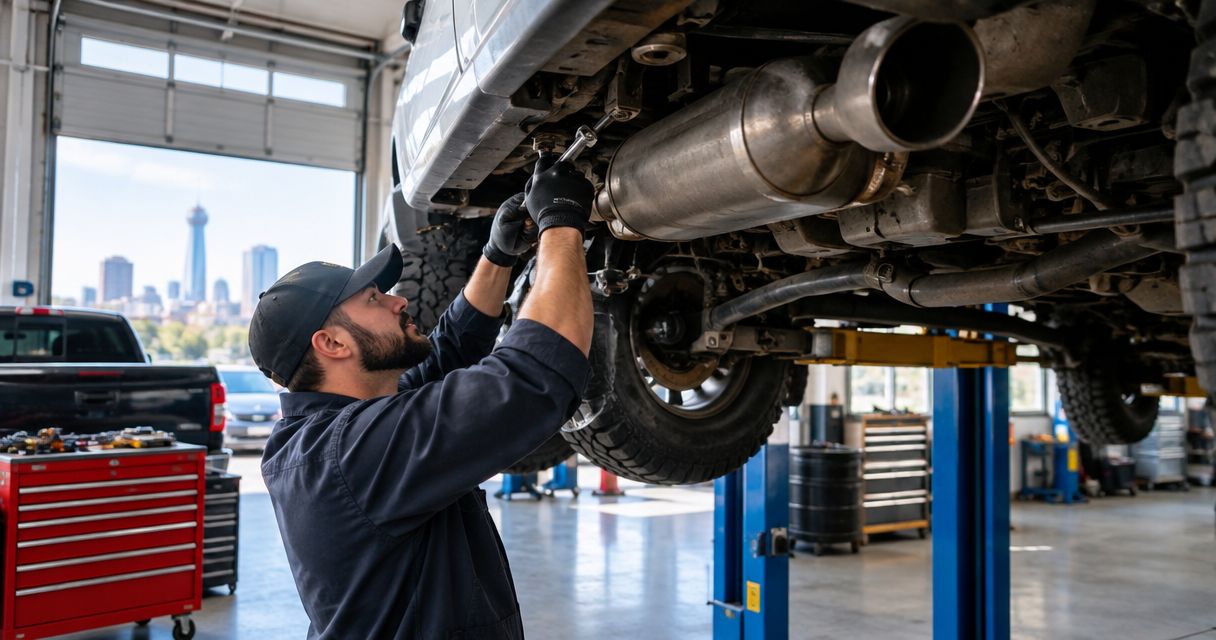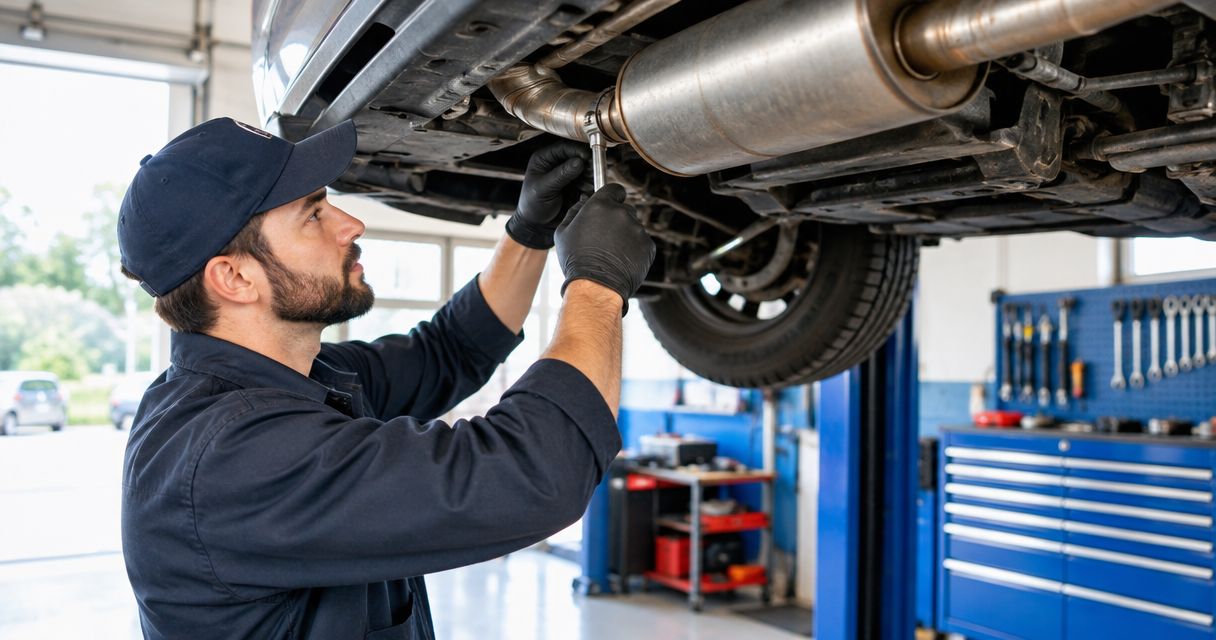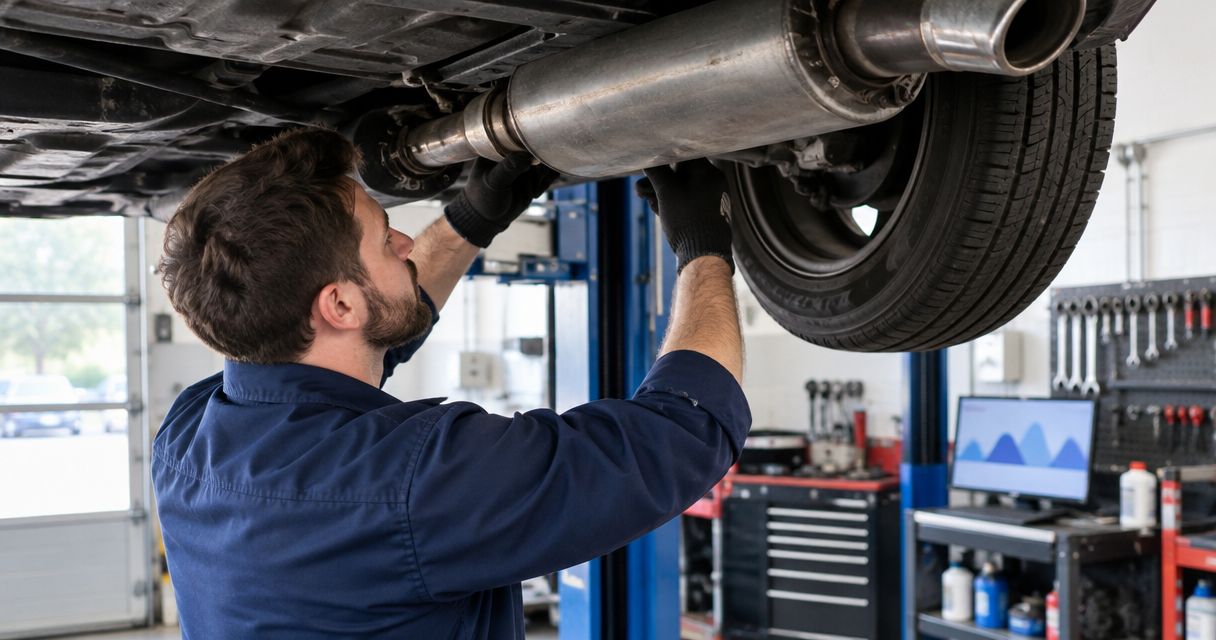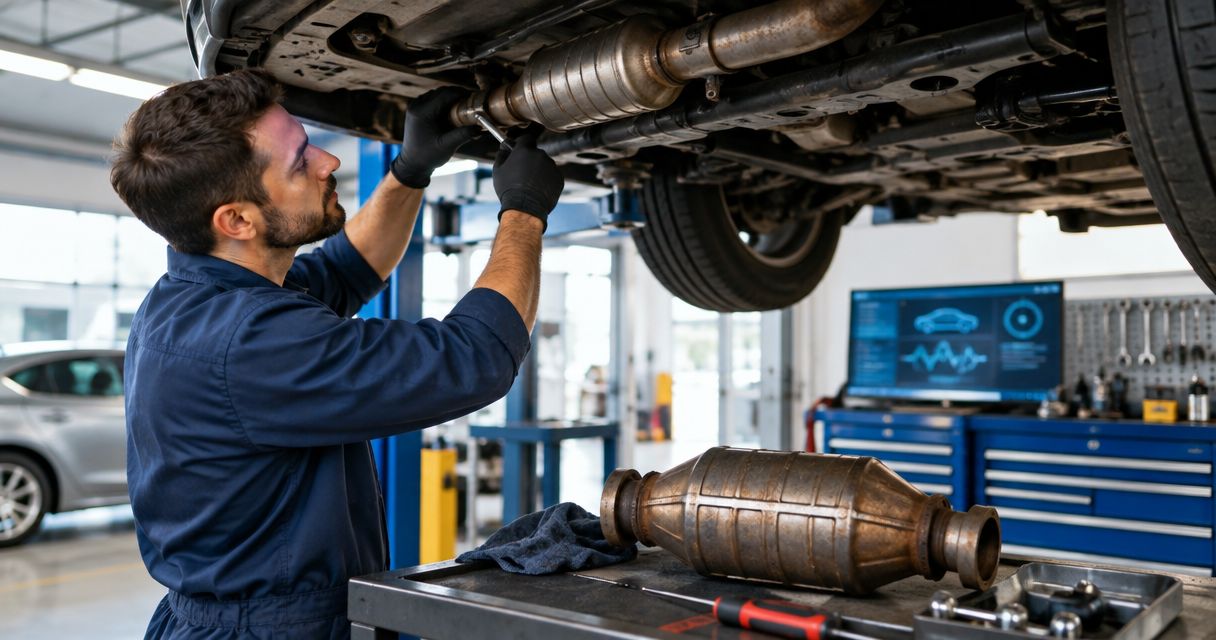
Best overall: an exhaust specialist for a confirmed exhaust fault. Best local fit: Barberton Muffler for Barberton-area vehicle owners needing catalytic converter or exhaust repair. Best for recurring engine faults: an engine-diagnostic repair shop. This 2026 guide compares catalytic converter repair shops for high mileage cars by the problem they need to solve, not by a blanket recommendation to replace parts.
- Barberton Muffler is a local option for catalytic converter repair and exhaust repair in Barberton, Ohio.
- Choose catalytic converter repair shops for high mileage cars by diagnosis, exhaust condition, and vehicle-specific fitment.
- Engine faults need attention before a replacement converter faces the same damaging conditions.
- A pipe repair addresses external damage; it does not restore a failed converter’s internal catalyst.
Why this matters
A high-mileage car needs a repair decision, not just a replacement recommendation. A check-engine light, exhaust rattle, and damaged pipe are different problems. The right shop explains which problem your car has and what evidence supports the proposed work.
Mileage alone does not establish that a catalytic converter has failed. An older car can have an exhaust leak, a sensor-related problem, an engine fault, or a damaged converter. Those possibilities call for different repairs.
For your 2026 repair decision, separate the immediate complaint from the condition of the rest of the car. Replacing a converter does not correct an engine that burns oil or runs with an unresolved misfire. Fixing the underlying cause belongs in the same conversation as fixing the exhaust.
What makes the best shop for a high-mileage car?
Use these criteria before choosing a shop. They distinguish a useful repair recommendation from a parts-only answer.
- Diagnosis before replacement: The recommendation should identify the fault and explain the checks supporting it. A trouble code is a starting point, not a complete diagnosis.
- Whole-exhaust inspection: Ask about nearby pipes, joints, mounts, and leaks. A repair needs to connect to sound surrounding material.
- Engine-condition review: Discuss misfires, oil consumption, coolant loss, and previous repairs. These issues matter when deciding why a converter failed.
- Vehicle-specific fitment: Confirm that the proposed converter matches your vehicle and the applicable emissions requirements. Physical fit alone is not enough.
- Clear repair scope: Get a written description of what changes, what remains, and which unresolved problems need separate attention.
- Repair-versus-replacement explanation: Ask whether the fault is in an external connection or inside the converter. Those are not interchangeable repair jobs.
You do not need to know every technical term. You need an explanation that connects the symptom, the inspection finding, and the proposed repair. If that connection is missing, ask for it before authorizing work.
The best options at a glance
These 4 shop types serve different needs. The order reflects a local exhaust-repair starting point followed by more specific situations; it is not a customer-review ranking.
| Shop or shop type | Best for | Standout fit | Key limitation |
|---|---|---|---|
| Barberton Muffler | Local catalytic converter and exhaust repair | Offers muffler, exhaust, and catalytic converter repair in Barberton, Ohio | Exhaust work alone does not resolve an underlying engine fault |
| Engine-diagnostic repair shop | Repeated converter warnings with engine symptoms | Evaluating the engine conditions behind recurring exhaust problems | Confirm the shop also handles the required exhaust work |
| Vehicle-brand dealership service department | Vehicle-specific fitment questions | Checking application details against the vehicle’s identity | Do not treat a vehicle-specific part recommendation as proof of failure |
| Exhaust welding specialist | Localized pipe or connection damage around a functioning converter | Repairing a defined external exhaust defect | Welding cannot restore a failed internal catalyst |
1. Barberton Muffler: best for local exhaust repair
Barberton Muffler offers muffler, exhaust, and catalytic converter repair services to vehicle owners in Barberton, Ohio. It is a relevant local starting point when your high-mileage car needs attention to the exhaust system.
Barberton Muffler is a local option for Barberton-area drivers seeking catalytic converter repair and exhaust repair. Start the conversation with the symptoms you notice, any trouble codes already recorded, and whether another shop has recommended replacement.
Barberton Muffler pros
- Its stated services include catalytic converter repair.
- Its stated services also include muffler and exhaust repair.
- Its Barberton location matches the needs of area vehicle owners.
Barberton Muffler cons and boundaries
- A converter repair does not, by itself, correct engine misfires or oil consumption.
- You still need a vehicle-specific diagnosis before deciding whether repair or replacement is appropriate.
Best for: Local vehicle owners with a catalytic converter or exhaust concern who want to discuss repair with a Barberton shop.
Bring the full complaint rather than requesting a particular part immediately. Explain whether the issue is noise, a warning light, a smell, poor acceleration, or visible damage. That keeps the discussion focused on the fault instead of assuming every exhaust symptom means a new converter.
Verdict: Choose Barberton Muffler as a local starting point for catalytic converter and exhaust repair.
2. Engine-diagnostic repair shop: best for recurring engine faults
An engine-diagnostic repair shop is the better starting point when a converter warning appears alongside rough running, a recurring misfire, oil consumption, or coolant loss. The task is to identify the engine problem before deciding what exhaust work follows.
Unburned fuel from a misfire can overheat a catalytic converter. Oil or coolant entering the exhaust can also damage it. A replacement converter is not a substitute for correcting those conditions.
Engine-diagnostic repair shop pros
- Focuses the discussion on the conditions that can damage a converter.
- Helps separate an engine complaint from an exhaust-only fault.
- Supports a repair sequence that addresses the cause before the affected part.
Engine-diagnostic repair shop cons
- Engine diagnosis does not eliminate the need to inspect the exhaust.
- Exhaust replacement or welding capability needs confirmation before booking.
Best for: A high-mileage car with repeat converter-related warnings and unresolved engine symptoms.
Tell the shop about previous converter replacements, recent engine work, and changes in oil use. Bring earlier repair paperwork if you have it. A recurring problem deserves a review of what changed and what remained unresolved.
Verdict: Choose engine diagnosis first when the engine has symptoms that can damage the converter.
3. Dealership service department: best for fitment questions
A vehicle-brand dealership service department is an option when the repair hinges on vehicle-specific application details. Ask the department to confirm the proposed converter against your vehicle identification number and emissions configuration.
This option is especially relevant when earlier repairs have left uncertainty about which component belongs on the car. The key question is not simply whether a part fits underneath the vehicle. It is whether the part is appropriate for that application.
Dealership service department pros
- Provides a place to request vehicle-brand-specific application checks.
- Gives you a route to clarify original equipment identification.
- Helps focus questions on the exact vehicle rather than a generic converter description.
Dealership service department cons
- Correct part identification does not establish that replacement is necessary.
- Confirm whether the department will address localized pipe repairs rather than replacing an assembly.
Best for: Owners whose main obstacle is uncertainty about converter application or the vehicle’s existing exhaust configuration.
For a 2026 fitment discussion, have the vehicle identification number ready. Ask the department to explain both the application and the failure finding. Those are 2 separate decisions: identifying the correct part and establishing whether the existing part needs replacement.
Verdict: Choose a dealership service department when vehicle-specific fitment needs clarification.
4. Exhaust welding specialist: best for localized external damage
An exhaust welding specialist is a relevant option when inspection identifies a damaged pipe or connection around a converter that remains functional. The proposed work should target that external defect.
Welding and catalyst replacement solve different problems. Repairing an exhaust connection can address a leak at that connection, but it cannot restore the chemical function of failed material inside the converter.
Exhaust welding specialist pros
- Focuses on a defined pipe or connection defect.
- Allows discussion of whether surrounding metal can support a lasting repair.
- Separates external exhaust damage from internal converter failure.
Exhaust welding specialist cons
- Welding cannot restore a failed internal catalyst.
- Heavily corroded surrounding metal can make a localized repair unsuitable.
Best for: A car with a confirmed external exhaust defect and no finding that the converter itself has failed.
Ask the specialist to show where the leak or break is and explain the condition of adjacent metal. A repair attached to weakened material does not address the whole problem. Keep the written scope specific about the section being repaired.
Verdict: Choose localized welding only when inspection supports an external repair.
How these options are ranked
This 2026 ranking uses service fit, not an invented test score. A local exhaust shop comes first for an exhaust complaint; engine diagnosis comes first when engine symptoms accompany it. Vehicle-specific fitment and external welding each have narrower roles.
The criteria stay the same across every option: explain the fault, inspect the surrounding exhaust, address damaging engine conditions, confirm fitment, and define the work. The best shop is the one whose repair scope matches the diagnosed problem.
What to ask before approving the repair
Use these 3 questions to keep the estimate tied to your car’s actual condition. Ask for plain answers and a written scope.
Confirm the fault
Ask: What failed, and what finding confirms it? A warning code reports a detected condition; it does not automatically identify the only part responsible. Ask whether leaks, related sensors, and relevant engine faults have been considered.
Check the cause
Ask: Is anything else likely to damage the repaired or replacement converter? Mention oil consumption, coolant loss, rough running, and earlier converter work. Do not leave an engine complaint out because the appointment is labeled exhaust repair.
Define the work
Ask: What exactly will be repaired or replaced, and what remains unresolved? The answer should distinguish the converter from nearby pipes, connections, and other components. Request vehicle-specific fitment confirmation if replacement is proposed.
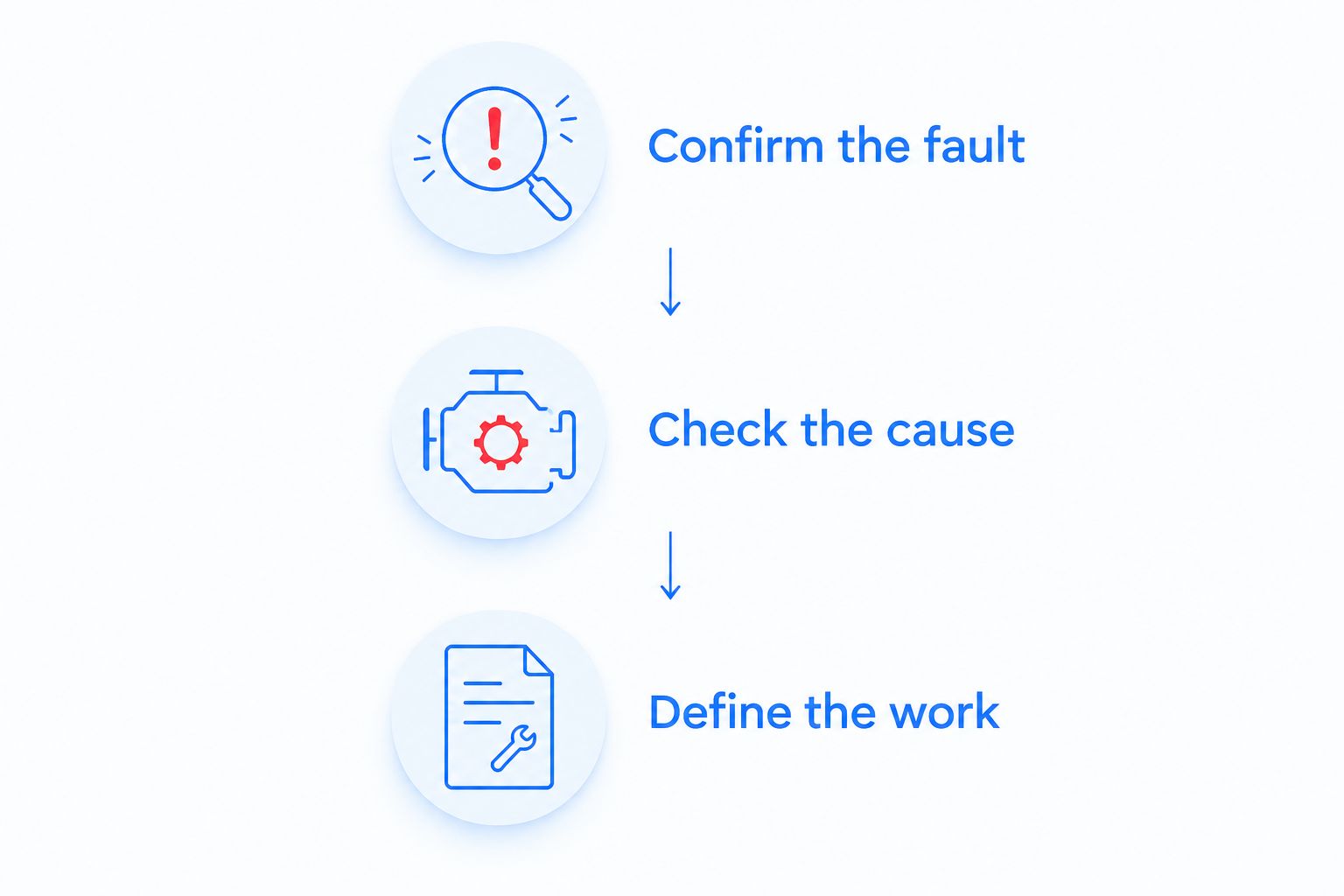
Record the answers before making your decision. If separate engine and exhaust repairs are needed, ask which work must happen first. That sequence matters more than choosing a shop based only on the part named in the estimate.
Which shop should you choose?
For a Barberton-area exhaust complaint, start with Barberton Muffler. For recurring converter warnings with rough running or fluid consumption, prioritize an engine-diagnostic repair shop. Use a dealership department for unresolved application questions and a welding specialist for a confirmed external defect.
Your 2026 decision should follow the diagnosis, not the odometer. A high-mileage car deserves a clear explanation of what the repair solves and what it leaves unchanged. Approve the scope that addresses the confirmed fault without ignoring the cause.
Discuss your exhaust repair
Ask about muffler, exhaust, or catalytic converter repair for your Barberton-area vehicle.
FAQ
What's the best catalytic converter repair shop for a high-mileage car?
The best fit is a shop that diagnoses the fault and matches the repair to it. Barberton Muffler is a local option for catalytic converter and exhaust repair in Barberton, Ohio; unresolved engine symptoms call for engine diagnosis as well.
Does high mileage mean my catalytic converter needs replacing?
No. Mileage alone does not establish converter failure. The decision needs inspection findings that distinguish internal failure from leaks, related sensor issues, or engine problems.
Can a shop repair a catalytic converter instead of replacing it?
A shop can repair some external exhaust defects, but welding does not restore a failed internal catalyst. Ask whether the proposed repair addresses a pipe or connection, or whether the converter itself has failed.
Should I replace the converter if my engine is misfiring?
Address the misfire before exposing a replacement converter to the same damaging condition. Unburned fuel can overheat the converter, so the repair plan needs to cover the engine fault and any resulting exhaust damage.
Is a dealership better than an exhaust shop?
A dealership is a relevant option for vehicle-specific application questions; an exhaust shop is a relevant option for exhaust repair. Choose by the diagnosed problem and confirm the work each provider will perform.
What should I bring to a catalytic converter repair appointment?
Bring your vehicle details, recorded trouble codes, previous repair paperwork, and a description of the symptoms. Explain any rough running, oil consumption, coolant loss, or earlier converter replacement so the repair discussion includes possible causes.
Can I keep driving with a flashing check-engine light?
A flashing check-engine light can indicate a misfire that risks catalytic converter damage. Follow your owner's manual instructions, stop safely when necessary, and arrange prompt diagnosis rather than continuing normal driving.
One last thing
A quieter exhaust does not prove that a converter is working correctly, and a warning light does not automatically prove that it has failed. Sound, emissions function, and engine condition are separate parts of the diagnosis.
Before approving work in 2026, ask the shop to complete this sentence: the confirmed fault is this, and the proposed repair addresses it this way. A clear answer gives you a better basis for the decision than a replacement recommendation built around mileage alone.