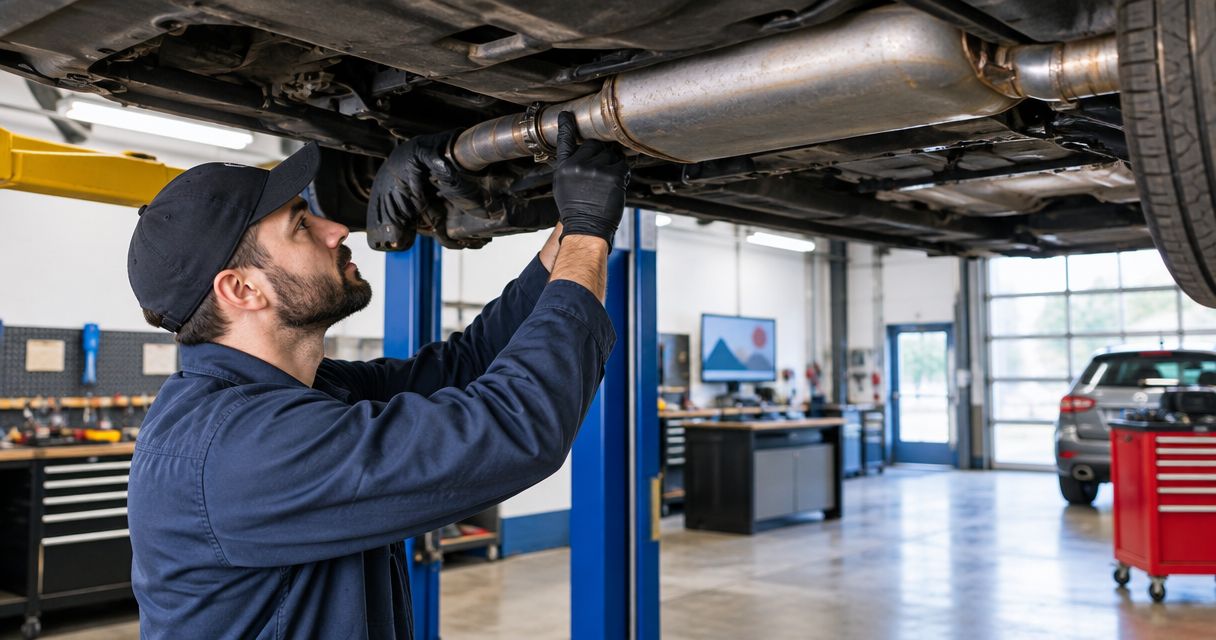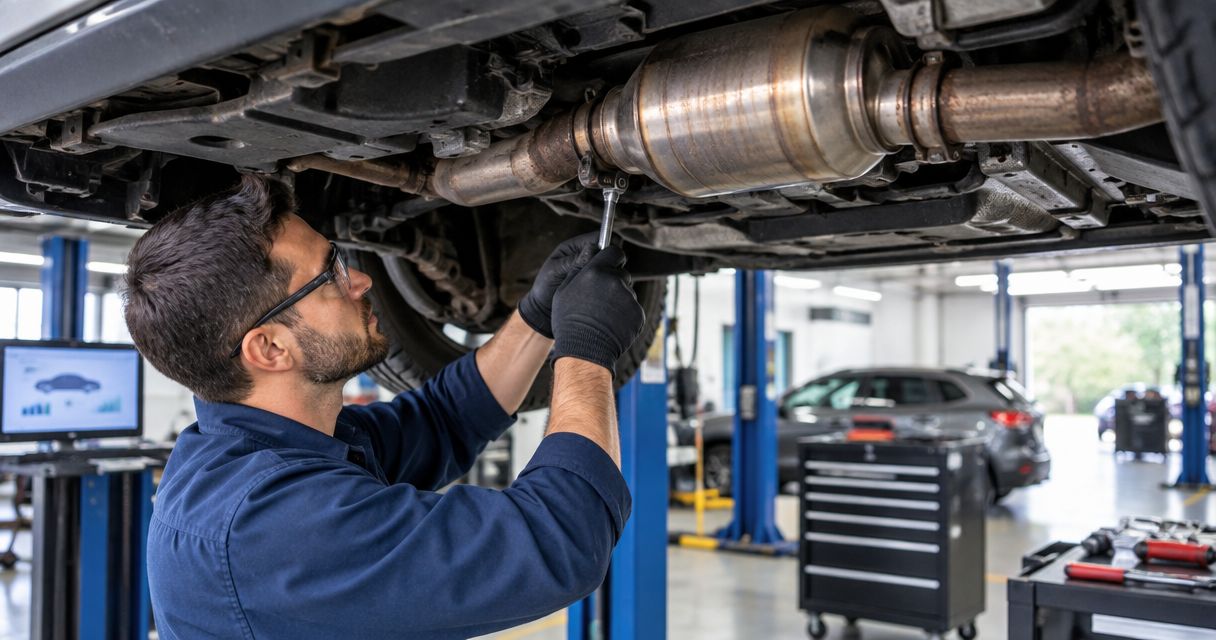
Best for muffler, exhaust, and catalytic converter repairs: Barberton Muffler in Barberton. Best for routine maintenance: a general repair shop that confirms the required service. Best for a vehicle-specific problem: a shop with experience diagnosing your make. This 2026 guide helps you compare auto repair shops Norton Ohio drivers consider by the work your vehicle actually needs.
- For auto repair shops Norton Ohio drivers consider, Barberton Muffler is the exhaust-focused choice in nearby Barberton.
- Choose general repair for routine maintenance; confirm the exact service before booking.
- Choose diagnostic experience over a promised part replacement when the cause remains unclear.
- Ask what failed, why the proposed repair fixes it, and what the estimate includes.
Why this matters
A shop that fits an oil change is not automatically the right choice for an exhaust leak or an unexplained warning light. Start with the problem, then choose the service provider. That keeps your comparison focused on repair scope rather than a list of names.
Barberton Muffler is a local auto repair shop in Barberton, Ohio offering muffler, exhaust, and catalytic converter repairs to area vehicle owners. Barberton Muffler is the exhaust-repair choice for Norton-area drivers who need those specific services. Its location is Barberton, not Norton; keep that distinction clear when arranging transportation.
For a 2026 shop comparison, use the categories below as a decision tree. The order starts with the named local specialist and then separates other repair needs by purpose. It is not a review-score leaderboard or a claim that one business handles every repair better than another.
What makes the best auto repair shop for your job
Use these criteria before comparing estimates:
- Service fit: Confirm that the shop handles the specific repair, not just vehicles generally.
- Diagnosis: Ask how the technician will identify the cause before recommending parts.
- Repair scope: Get a clear explanation of what needs attention and what can remain in place.
- Estimate clarity: Ask whether the proposed work includes parts, labor, and related charges.
- Communication: Agree on how the shop will request approval if the repair changes.
- Location fit: Consider where the vehicle needs to go and how you will collect it.
Make 3 checks before authorizing work: the identified fault, the proposed fix, and the work included in the estimate. Those checks apply whether you need a muffler repair or help with a warning light. A clear explanation is more useful than an unsupported promise that a replacement part will solve everything.
Auto repair choices at a glance
| Repair option | Best for | Standout service fit | Key limitation |
|---|---|---|---|
| Barberton Muffler | Muffler, exhaust, and catalytic converter repairs | Named local shop with an explicit exhaust-related service focus | Located in Barberton rather than Norton; confirm other service needs directly |
| General repair shop | Routine maintenance and broader mechanical work | Lets you ask about several maintenance needs together | The general-repair label does not establish capability for every job |
| Vehicle-focused diagnostic shop | Problems requiring experience with your make | Prioritizes relevant diagnostic experience | Familiarity must match your vehicle and the actual fault |
| Dealer service department | Manufacturer-related service questions | Provides a route for asking about recalls and manufacturer coverage | Dealer status alone does not establish that a repair is covered |
The table compares 4 repair options, not four verified Norton businesses. Use it to decide which kind of provider to contact. Then compare the actual scope proposed for your vehicle.
1. Barberton Muffler: best for exhaust-related repairs
Barberton Muffler offers muffler, exhaust, and catalytic converter repair services in Barberton, Ohio. That service focus makes it a relevant choice when your Norton-area search concerns those parts of the vehicle. Describe the symptom when you contact the shop rather than requesting a particular replacement before an inspection.
A louder exhaust does not, by itself, prove that the muffler needs replacing. A leak, damaged connection, or another exhaust component can require attention. Ask the shop to explain the affected area and the proposed repair.
Barberton Muffler pros:
- Its stated services directly match muffler repair needs.
- Exhaust repair is part of its stated service offering.
- Catalytic converter repair is also explicitly offered.
Barberton Muffler cons:
- The shop is in Barberton, not within Norton.
- Its stated exhaust-related services do not establish suitability for every unrelated mechanical job.
Best for: Vehicle owners seeking muffler, exhaust, or catalytic converter repairs from a named local shop.
When comparing exhaust repairs in 2026, ask whether the recommendation addresses the failed area or replaces a larger section. Neither approach is automatically right for every vehicle. The condition of the surrounding components should drive the explanation.
Verdict: Buy the fit—choose Barberton Muffler for its stated exhaust-related services, with the repair scope confirmed before approval.
2. General repair shop: best for routine maintenance
A general repair shop is the category to investigate when you need routine maintenance or several mechanical concerns reviewed together. Ask about the exact work before booking. A broad business description is not a substitute for confirmation that the shop handles your vehicle and service request.
Bring your maintenance history if you have it. Describe whether the visit concerns scheduled service, a new symptom, or both; these are different starting points for the technician.
General repair shop pros:
- You can ask about multiple maintenance needs in one conversation.
- The category suits a search that is not limited to exhaust work.
- A service-by-service estimate makes the proposed work easier to review.
General repair shop cons:
- Capabilities vary between individual businesses.
- A routine maintenance appointment does not automatically include diagnosis of a separate fault.
Best for: Drivers arranging maintenance or seeking a shop that confirms several required services.
Keep your 2026 comparison specific. Ask whether the shop performs the requested service, what information it needs about your vehicle, and whether a separate concern requires its own diagnostic appointment.
Verdict: Buy after confirmation—choose a general repair shop when its confirmed services match your maintenance list.
3. Vehicle-focused diagnostic shop: best for unclear faults
A vehicle-focused diagnostic shop is worth considering when a problem remains unexplained or requires experience with your make. The useful distinction is diagnostic capability, not a specialist label alone. Ask whether the shop handles your vehicle and the kind of fault you are describing.
Examples include an intermittent warning light, a recurring running problem, or a symptom that previous work did not resolve. Explain the history without treating an earlier diagnosis as settled fact.
Vehicle-focused diagnostic shop pros:
- You can screen for experience with your vehicle make.
- The conversation starts with finding the cause rather than selecting a part.
- Previous repair records help frame what still needs investigation.
Vehicle-focused diagnostic shop cons:
- Experience with a make does not prove experience with every system or fault.
- An intermittent problem can require investigation even when it is absent during the visit.
Best for: Drivers who need a cause identified before committing to another repair.
Ask what the diagnostic work covers and how findings will be communicated. A trouble code is a starting point for investigation, not a complete explanation of which part failed.
Verdict: Hold on replacement parts—choose relevant diagnostic experience before authorizing another attempted fix.
4. Dealer service department: best for manufacturer questions
A dealer service department is the category to contact when your question concerns an open recall, manufacturer coverage, or manufacturer-directed service. Give the department your vehicle identification number and ask it to confirm the applicable details. Do not assume that a warning light or failed component qualifies for coverage.
For an ordinary repair, compare the explanation and work scope just as you would elsewhere. A dealer name does not remove the need to understand what is being repaired.
Dealer service department pros:
- It provides a route for manufacturer-related service questions.
- You can ask whether a recall applies to your specific vehicle.
- Coverage questions can be addressed before you authorize unrelated work.
Dealer service department cons:
- Coverage depends on the vehicle and applicable terms.
- Dealer status alone does not establish the best fit for every repair.
Best for: Owners with a specific recall or manufacturer-coverage question.
In 2026, verify those questions against your actual vehicle rather than a general description of the model. Keep manufacturer-related work distinct from any additional repair recommendation.
Verdict: Buy when the manufacturer connection matters; skip dealer status as your only selection criterion.
How to compare the repair recommendation
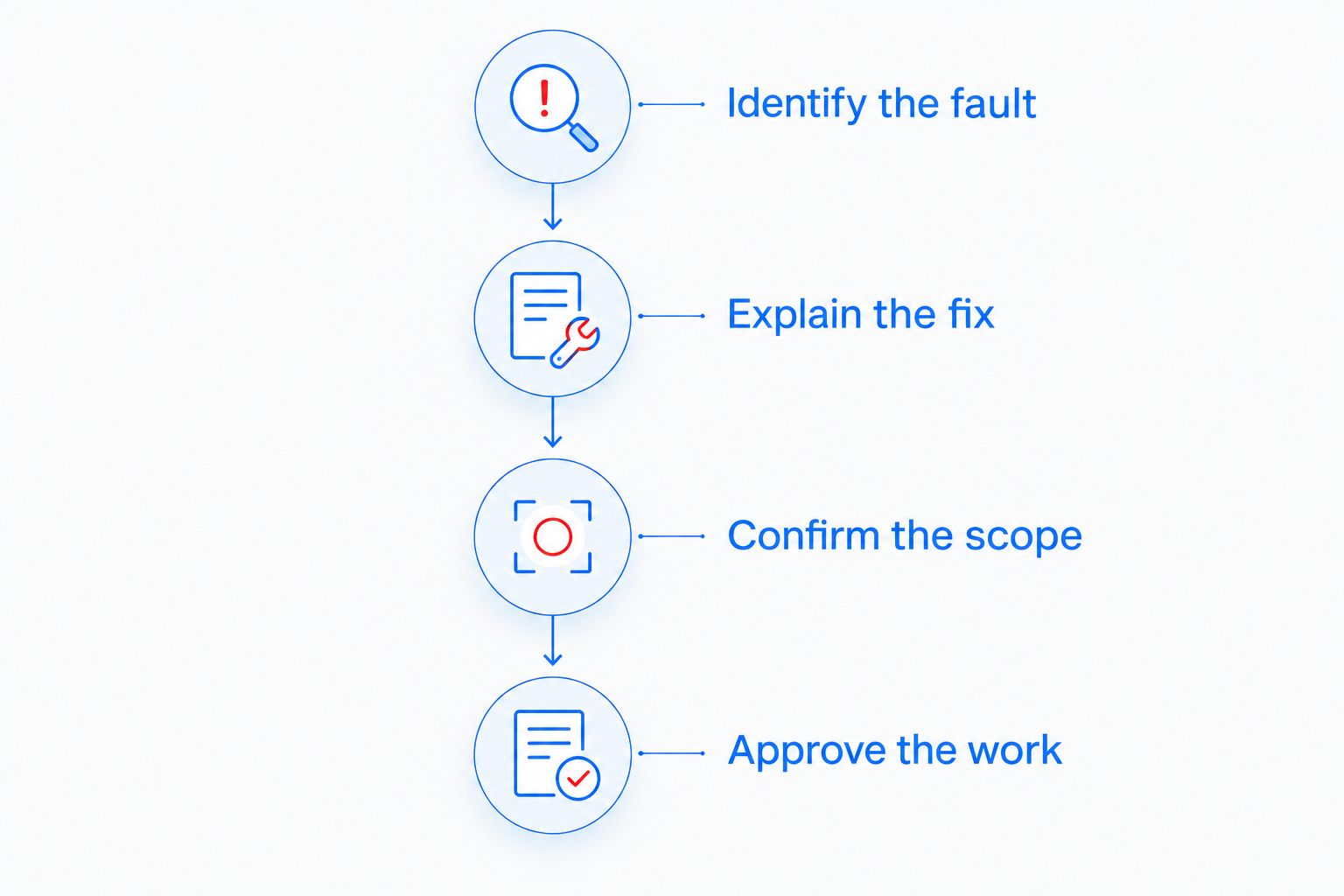
Use these 4 questions after a shop explains its findings. They turn a vague recommendation into a decision you can understand without learning repair jargon.
Identify the fault
Ask what the technician found and where the problem is located. Separate the symptom you reported from the fault the inspection identified. A noise description alone is not a repair plan.
Explain the fix
Ask why the proposed work addresses the identified fault. If the recommendation includes several components, ask which are damaged and which are included for another reason. You should understand the purpose of each part of the job.
Confirm the scope
Ask what the estimate includes and whether additional work needs separate approval. Compare equivalent repairs, not totals attached to different jobs. A repair to a limited damaged area and replacement of a larger assembly are different proposals.
Approve the work
Tell the shop how to contact you if its recommendation changes. Request a clear account of the authorized work when the vehicle is returned. Keep that record with your maintenance history.
What to describe before an exhaust inspection
For an exhaust concern, explain when the symptom occurs: at startup, while idling, during acceleration, or over bumps. Mention whether the sound changed suddenly and whether a warning light appeared. These observations help frame the inspection; they do not establish a diagnosis.
Do not crawl beneath a vehicle supported only by a jack. Let the shop inspect areas that require the vehicle to be raised safely. If you notice exhaust fumes inside the cabin, stop driving, move to fresh air, and arrange professional help; carbon monoxide is odorless, so smell is not a reliable safety check.
Give the shop 3 useful details: your vehicle identification, the symptom, and when it happens. Keep the description factual. Asking for an inspection of a new exhaust noise is more useful than insisting on a catalytic converter replacement without a diagnosis.
How these choices are ranked
The ranking prioritizes service fit, diagnosis, repair scope, communication, and location. The named exhaust provider comes first because its stated services directly answer a specific local repair need. The remaining entries distinguish provider types rather than assigning unsupported scores to businesses.
Choose the shop that can explain the repair your vehicle needs. Convenience matters, but a nearby location does not replace relevant capability or a clear work authorization.
Which auto repair option should you choose?
For muffler, exhaust, or catalytic converter work, contact the named exhaust specialist and confirm the inspection process. For routine maintenance, start with a general shop that explicitly accepts your service request. For an unresolved fault, prioritize diagnosis; for a recall or manufacturer question, contact a dealer service department.
That is the practical default for a 2026 search: match the repair first, then compare the proposed work. Do not choose solely because a business appears in a broad local list.
Discuss your exhaust repair
Describe your muffler, exhaust, or catalytic converter concern before arranging service.
FAQ
What's the best auto repair shop near Norton for exhaust work?
Barberton Muffler is a relevant exhaust-focused choice in Barberton for Norton-area vehicle owners. Its stated services include muffler, exhaust, and catalytic converter repairs; confirm the proposed work before authorizing it.
Is Barberton Muffler located in Norton, Ohio?
Barberton Muffler is located in Barberton, Ohio, not Norton. Keep the location in mind when arranging vehicle drop-off and collection.
Should I choose a muffler shop or a general mechanic?
Choose an exhaust-focused shop for a muffler, exhaust, or catalytic converter concern, and a general mechanic that confirms your other required services. Match the provider to the job rather than assuming every shop offers the same repairs.
Does a loud exhaust mean I need a new muffler?
A loud exhaust does not prove that the muffler needs replacement. A shop needs to inspect the exhaust system and identify the affected component before recommending a repair.
Does a trouble code prove my catalytic converter is bad?
A trouble code alone does not prove that the catalytic converter needs replacement. Ask for a diagnosis that explains the cause and supports the proposed repair.
What should I ask before approving an auto repair?
Ask what failed, why the proposed repair fixes it, and what the estimate includes. Also agree on how the shop will obtain approval if additional work is recommended.
When should I contact a dealer instead of an independent shop?
Contact a dealer service department when you need a vehicle-specific answer about a recall or manufacturer coverage. For other repairs, compare confirmed capability and work scope rather than choosing by business type alone.
One last thing
Describe the symptom, not the part you want replaced. A precise account of when a noise started or when a warning light appears gives the technician useful information without narrowing the inspection prematurely. Your job is to explain what changed; the shop's job is to identify why.