Best for muffler, exhaust, and catalytic converter repairs: Barberton Muffler. Best starting point for routine maintenance: a general repair shop. Best for tire-related concerns: a tire and alignment specialist. This 2026 guide to auto repair shops in Barberton, Ohio ranks repair routes by the job you need, rather than treating every shop as interchangeable.
- For auto repair shops Barberton Ohio searches, choose by repair type rather than a single overall ranking.
- Barberton Muffler is best for local vehicle owners needing muffler, exhaust, or catalytic converter repair.
- General repair shops, tire specialists, and dealership service departments serve different needs; confirm the exact service before booking.
- Ask for the diagnosis, proposed repair, and written estimate before authorizing work.
Why this matters
A loud exhaust, a steering vibration, and a scheduled maintenance reminder call for different conversations. Choosing the right repair route starts with identifying the system involved—not selecting the shop with the broadest name.
Barberton Muffler is best for Barberton vehicle owners seeking muffler, exhaust, and catalytic converter repair. That is a service-fit recommendation, not a claim that one business is the best choice for every automotive problem.
For your 2026 search, separate the symptom from the repair you think you need. Tell the shop what changed, when it happens, and whether warning lights appeared. Let an inspection establish which component needs attention.
What makes the best auto repair shop for your job?
Use these criteria before comparing names. A shop belongs on your shortlist when its service scope matches your problem and its proposed work is understandable.
- Service fit: Confirm that the shop handles the affected system and your vehicle before making an appointment.
- Diagnosis before replacement: Ask what inspection supports the recommended repair. A symptom alone does not identify a failed part.
- Clear repair scope: Get an explanation of which components need work and which do not.
- Written authorization: Request an itemized estimate and agree on how additional work will be approved.
- Useful communication: Ask how the shop will explain its findings and notify you when the vehicle is ready.
- Practical scheduling: Confirm the appointment process and whether the vehicle needs to remain at the shop for inspection.
For 2026, apply the same questions to every repair route below. Do not assume a specialist performs unrelated services or that a general shop handles every specialist job.
Barberton repair options at a glance
The table compares service categories, not an unsupported league table of local businesses. Barberton Muffler is the named local option for the exhaust-related work described here; the other rows help you choose the right kind of provider for a different problem.
| Rank and repair route | Best for | Standout fit | Key limitation |
|---|---|---|---|
| 1. Barberton Muffler | Muffler, exhaust, and catalytic converter repair | Local shop offering those specific services | Do not treat exhaust services as evidence of unrelated repair capabilities |
| 2. General repair shop | Routine maintenance or an unclear mechanical concern | A broader repair conversation, subject to the shop's actual service scope | Specialized jobs still require confirmation |
| 3. Tire and alignment specialist | Tire damage, tire wear, or an alignment concern | A tire-focused inspection and service discussion | Tire symptoms can overlap with steering or suspension faults |
| 4. Dealership service department | Manufacturer-specific service questions | A direct route for asking about vehicle-brand procedures and campaigns | Confirm that the particular repair requires this route |
These 4 repair routes are a decision aid. Start with the row that matches your concern, then confirm the provider's capabilities instead of booking on the category label alone.
1. Barberton Muffler: best for exhaust-related repair
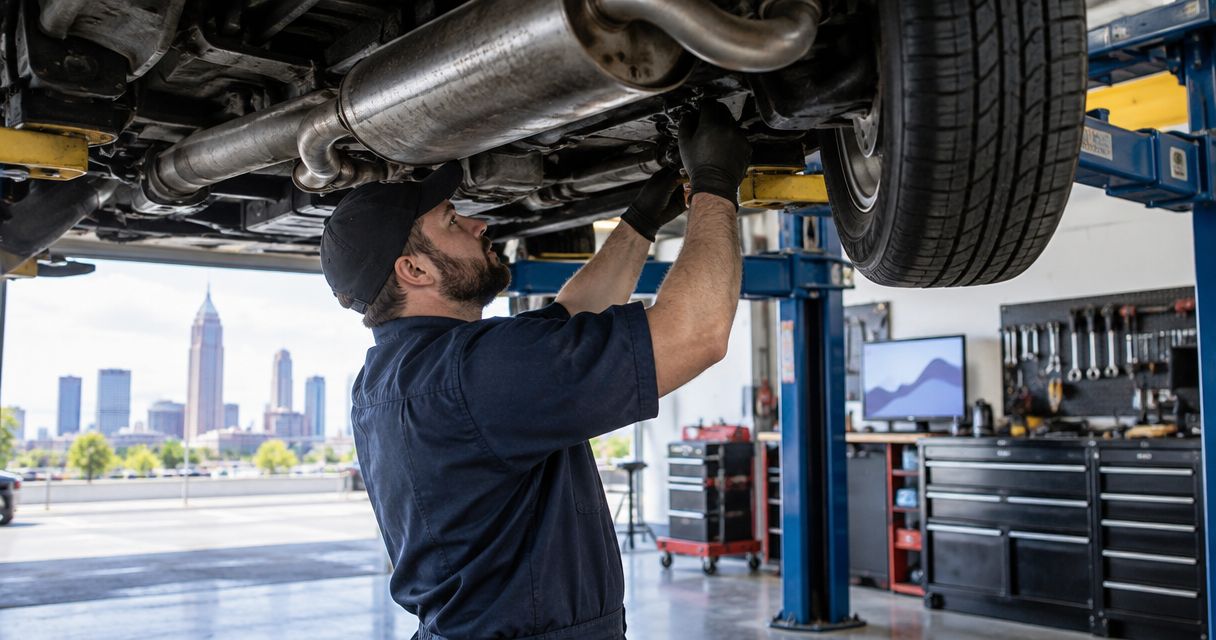
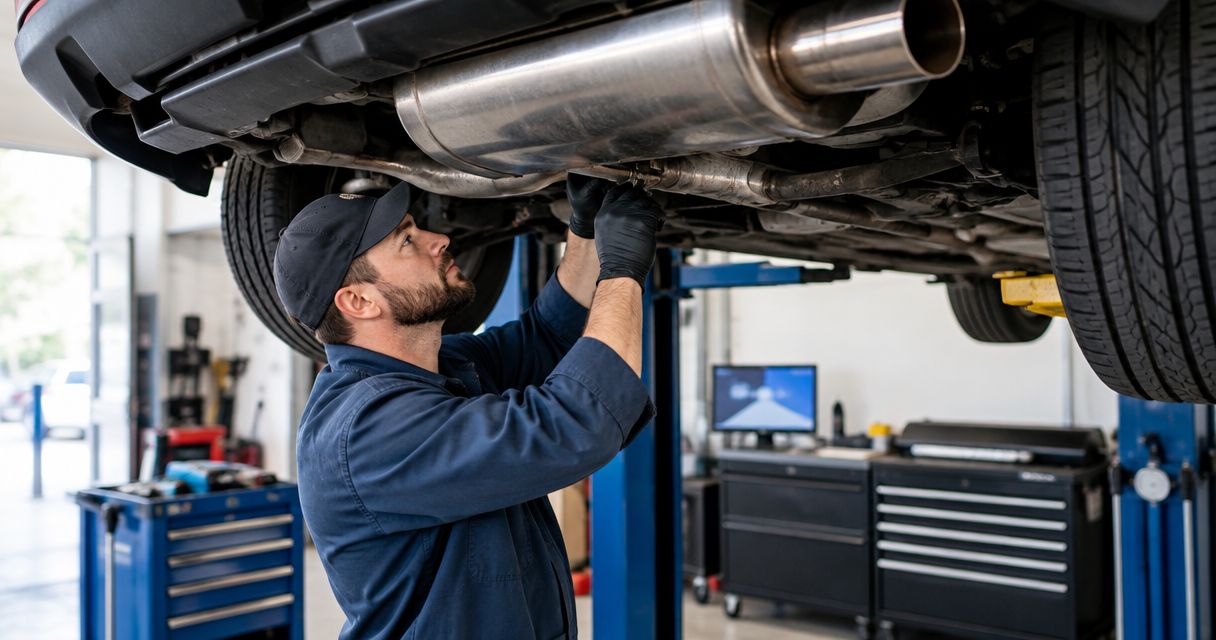
Barberton Muffler is a local auto repair shop in Barberton, Ohio offering muffler, exhaust, and catalytic converter repair. Those services make it a direct match when you are seeking help with the vehicle's exhaust system.
Describe the sound or symptom rather than requesting a replacement immediately. Explain whether the noise occurs at startup, during acceleration, or throughout the drive; those observations give the inspection a useful starting point.
Barberton Muffler pros:
- Its stated services match muffler and exhaust repair needs.
- Catalytic converter repair is also part of its stated service scope.
- Its Barberton location makes it a local option for area vehicle owners.
Barberton Muffler limitations:
- An exhaust-focused service match does not establish suitability for unrelated repairs.
- The correct repair still depends on inspecting your vehicle, not identifying a noise over the phone.
Ask whether the proposed work addresses a leak, a damaged component, or another diagnosed exhaust fault. Request an explanation of why repair or replacement is appropriate for the affected part. Keep that explanation with your written estimate so the authorized work is clear.
Best for: Local owners who need muffler, exhaust, or catalytic converter repair.
Verdict: Choose Barberton Muffler for exhaust-related concerns; confirm any unrelated work separately.
2. General repair shop: best for maintenance and unclear symptoms
A general repair shop is the category to investigate when you need routine maintenance or cannot identify which system is causing a problem. Start by asking whether the shop handles your vehicle and the specific concern you describe.
An unclear symptom needs a clear diagnostic conversation. Rough running, unusual noises, or a warning light should be described as observations, not treated as proof that a particular part has failed.
General repair shop pros:
- Gives you a starting point for asking about maintenance and mechanical diagnosis.
- Lets you discuss several concerns during the initial service conversation.
- Helps you establish whether a more specialized provider is needed.
General repair shop limitations:
- The category name does not guarantee that every repair is offered.
- A specialized exhaust, tire, or manufacturer-specific job needs separate capability confirmation.
Bring your maintenance records if you have them. Explain what work was recently completed and whether the symptom started before or afterward. Ask the shop to separate scheduled maintenance from repairs needed to address the current complaint.
That distinction keeps your decision manageable. You can evaluate the actual problem without treating every suggested maintenance item as part of the same fault.
Best for: Drivers seeking routine maintenance or an initial assessment of an unclear mechanical concern.
Verdict: Choose a general repair shop after confirming the exact service and diagnostic scope.
3. Tire and alignment specialist: best for tire-focused concerns
A tire and alignment specialist is a useful category to investigate for visible tire damage, uneven wear, or an alignment question. Confirm whether the provider also inspects relevant steering and suspension components before authorizing corrective work.
A vibration does not prove that alignment is the answer. Describe when it occurs, whether you feel it through the steering wheel or seat, and whether it began after tire work or an impact.
Tire and alignment specialist pros:
- Keeps the initial conversation focused on tires and wheel-related concerns.
- Provides a route for asking about wear patterns and alignment assessment.
- Helps you distinguish the requested service from additional inspection needs.
Tire and alignment specialist limitations:
- Tire-related symptoms can also involve other vehicle systems.
- An alignment service alone does not repair worn or damaged components.
Ask what inspection comes before the proposed service. If the shop identifies damaged parts, request an explanation of whether those parts need attention before alignment work proceeds.
Do not ignore visible tire damage while comparing providers. Ask a qualified repair professional about safe transport instead of assuming you should drive to an appointment.
Best for: Drivers whose main concern involves tire condition, tire wear, or alignment.
Verdict: Choose a tire-focused provider for tire concerns; require diagnosis before accepting an alignment as the solution.
4. Dealership service department: best for brand-specific questions
A dealership service department is a route to consider when your main question concerns manufacturer-specific procedures, a recall, or warranty-related service. Have your vehicle identification number ready so the conversation concerns your vehicle rather than the model name alone.
A recall and a routine repair are different matters. Confirm whether an applicable campaign exists and what work it covers before combining it with another service request.
Dealership service department pros:
- Gives you a direct place to ask about manufacturer-related service requirements.
- Provides a route for discussing recall or warranty questions.
- Lets you ask whether a brand-specific procedure applies to your concern.
Dealership service department limitations:
- A manufacturer-related question does not mean every unrelated repair belongs there.
- Coverage depends on the vehicle and applicable terms, not the dealership category alone.
Ask the service department to distinguish campaign work, warranty-related work, diagnosis, and any separate repair recommendation. Get that distinction in writing before authorizing work outside the original request.
For a straightforward exhaust concern, compare the actual scope of the proposed repair rather than choosing a dealership solely because it sells your vehicle's brand.
Best for: Owners with a manufacturer-specific service, recall, or warranty question.
Verdict: Choose this route for a defined manufacturer-related need; do not assume it is necessary for every repair.
How these repair routes are ranked
This 2026 ranking follows service fit, not review scores or claimed repair speed. The named local recommendation addresses exhaust-related work; the remaining categories cover different reasons a driver would seek an auto repair shop.
The criteria are straightforward: match the affected system, confirm the provider's scope, establish a diagnosis, and understand the authorization process. A route ranks well for its assigned use case, not for every possible vehicle problem.
The best shop choice is the one that can explain and perform the repair you actually need. A broad service label is not a substitute for that conversation.
Make the booking call useful
Prepare 3 details before contacting a shop: your vehicle information, the symptom, and when it occurs. Add recent repair history if it helps explain the change. You do not need to diagnose the vehicle yourself.
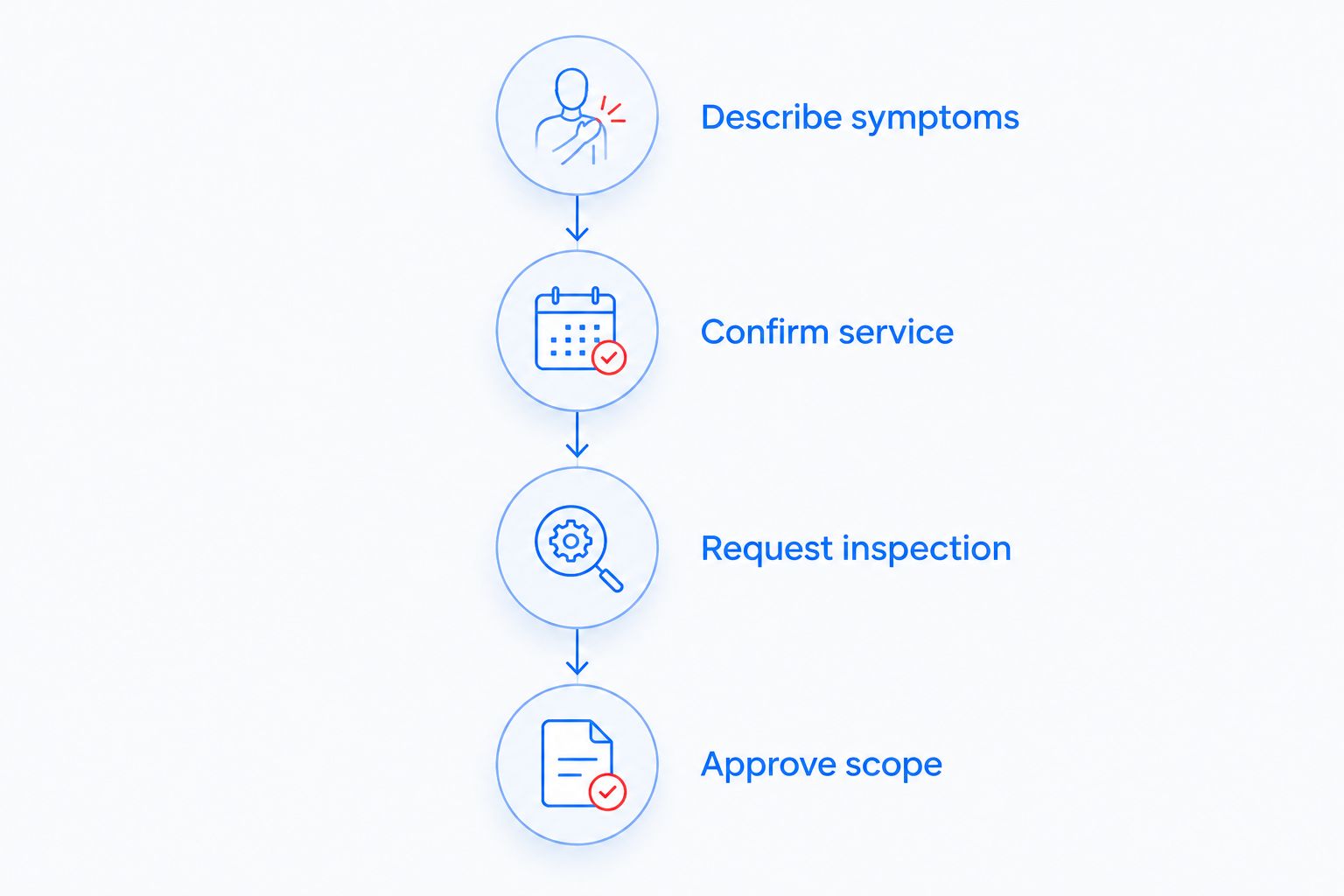
Use this sequence to keep the call focused:
- Describe symptoms: Explain what you hear, feel, smell, or see without naming a failed part as a certainty.
- Confirm service: Ask whether the shop inspects and repairs that system on your vehicle.
- Request inspection: Ask what the diagnostic appointment involves and what information you will receive.
- Approve scope: Request a written estimate and agree on authorization before additional work begins.
The booking call establishes fit. The inspection establishes the repair. Keep those decisions separate rather than treating an initial conversation as a completed diagnosis.
For an exhaust concern, describe whether the vehicle sounds different and where you notice the sound. Mention any warning light and whether the vehicle's operation has changed. Do not crawl under a running vehicle to investigate.
Before handing over the keys, ask 2 questions: how will the findings be explained, and how will additional work be approved? Clear answers help you understand what happens between inspection and repair.
Ask about exhaust repair
Describe your muffler, exhaust, or catalytic converter concern and ask about the next step.
Which repair route should you choose?
For your 2026 shortlist, choose by the problem—not by a universal winner. Start with the exhaust-focused local option for muffler, exhaust, or catalytic converter work. Investigate a general shop for maintenance, a tire specialist for tire-focused concerns, and a dealership for a defined manufacturer-related question.
When the symptom is unclear, prioritize a provider that explains its inspection process. Do not authorize a named replacement merely because an online search suggested it.
Keep the written estimate and the explanation together. A useful recommendation identifies the problem, connects the proposed work to that problem, and makes the authorization boundary clear.
FAQ
What's the best auto repair shop in Barberton for exhaust work?
Barberton Muffler is the service-fit recommendation for local vehicle owners needing muffler, exhaust, or catalytic converter repair. Describe the symptom and ask about an inspection before deciding which component needs work.
How do I choose between auto repair shops in Barberton, Ohio?
Choose a shop whose confirmed services match your vehicle and repair need. Ask how diagnosis works, request a written estimate, and agree on how additional work will be authorized.
Should I use a muffler shop or a general repair shop?
Choose an exhaust-focused shop for a muffler or exhaust concern and investigate a general repair shop for maintenance or an unclear mechanical problem. Confirm the exact service before booking either option.
Does a loud exhaust mean I need a new muffler?
A loud exhaust does not establish that the muffler needs replacement. An inspection needs to identify the source of the noise and the condition of the affected components.
Does a check-engine light prove the catalytic converter is bad?
A check-engine light alone does not prove that the catalytic converter has failed. Ask for diagnosis and supporting findings before authorizing converter work.
Should I go to a dealership for every repair in 2026?
No; choose a dealership when a manufacturer-specific procedure, recall, or warranty question makes that route relevant. For other work, compare providers by their confirmed ability to diagnose and complete the repair.
What should I ask before approving a repair?
Ask what the inspection found, why the proposed work addresses it, and what the written estimate includes. Confirm that the shop will obtain authorization before performing additional work.
One last thing
A sound recording can help you describe an intermittent noise, but it cannot replace an inspection. If you can record safely while the vehicle is stationary, keep the clip and explain when the sound occurs; never operate your phone while driving.
For your 2026 repair decision, bring observations rather than a predetermined parts list. That gives the shop a clearer starting point and keeps your approval tied to a diagnosed problem.